About ZENKYO
Platform of ZENKYO
- Independent from capitals/power, and political parties, we promote economic, social and political stature of teachers and staff uniting ourselves based on common demands.
- We defend independence of education and freedom of research and together with parents and citizens establish democratic education based on ideas and principles of the Constitution of Japan and the Fundamental Law Education enacted in 1947.
- Aiming at world peace and democracy, as well as the self-determination of peoples and defense of human rights, we promote international solidarity and interchange.
- We promote cooperation and solidarity with workers and trade unions extensively and defend and develop living and rights of working people.
- Cooperating with citizens on every social level, we defend freedom, peace and democracy and aim at the creation of affluent and social progress.
- With the pledge “Never Send Again Our Children to Battlefields!”, we endeavor to carve out a bright future for the child and youth.
Basic Information
Official Name: All Japan Teachers and Staffs Union 全日本教職員組合
Shortened Name: ZENKYO 全教
Slogan: Never Send Again Our Children to the Battlefields!
Formed in: March 6, 1991
Headquarters: Tokyo, Japan
Prefectural Teachers Unions: 48 Teachers Unions
History
The predecessors of All Japan Teachers and Staffs Union (ZENKYO) were Conference of All Japan Teachers and Staffs Union as a national organization of Prefectural Teachers and Staff Unions and Japan Senior High School Teachers and Staff Union (NIKKOKYO) that had a long history in Japan.
On March 6, 1991, ZENKYO was formed as a national organization by two organizations, Prefectural Teachers and Staff Unions and National Federation of Private School Teachers and Staffs Unions (ZENKOKU-SHIKYOREN). ZENKYO aims to achieve its goals and aims stated in a platform of the union.
On April 1, 2014, Japan Senior High School Teachers and Staff Union (NIKKOKYO) merged with ZENKYO. Since then, ZENKYO has made great progress in activities with NIKKOKYO’s history, and strengthened itself as a representative national organization.
International Solidarity and Activities
ZENKYO focuses on bilateral friendship and solidarity. We exchange the state of educational such as teacher shortage, teachers’ intensive long working hours and excessive overwork, political intervention, organizing, and our efforts and actions against those issues.
Every spring, we publish “ZENKYO NEWSLETTER” as an annual newspaper in English. The newsletters are sent to more than 100 teachers unions around the world and individuals via e-mails.
Through the years, ZENKYO has held international symposiums with Research Institute of Democracy and Education (RIDE).
- “International Symposium for the Struggle against the Attack on Teachers’ Professionality and Stronger Control over Teachers”, 2018
Guests: Manuela Mendonça (FENPROF), Claudio Franqui (FLC-CGIL), Barbara Madeloni (MTA) - “International Symposium on the ILO Recommendations and Decent Work of Teachers”, 2014
Guests: Ana Gasper (FENPROF), Roger Ferrari (SNES-FSU)
ZENKYO learns and builds a stronger solidarity and friendship with teachers unions in the world.
Activities to Make the Most of ILO/UNESCO Recommendation concerning the Status of Teachers, 1966 and 1997
For decades, ZENKYO has strived to improve the working conditions of teachers for protecting their lives and rights, and children’s benefit from education based on the ILO/UNESCO’s 1966 Recommendations concerning the Status of Teachers. Representative examples are below;
In 2002: ZENKYO submitted an allegation to CEART that the Japanese government on non-observance of the 1966 Recommendation concerning the Status of Teachers. MEXT promoted a system of personnel management for “incompetent teachers” and a new teacher appraisal system.
CEART requested the government to make efforts for resolution of the problems from the 1st recommendations until the 5th recommendations. The report of CEART mentioned the significance of good practices and deepened social dialogues between the government and ZENKYO.
In 2014: ZENKYO submitted an allegation to CEART against the Japanese government regarding “intensive long working hours and excessive overwork” and situations of being employed as “non-permanent teachers”.
In 2023: ZENKYO submitted an allegation of “Teachers’ Excessively Long Working Hours and Excessive Overwork in Japan -ZENKYO’s allegation in light of ILO/UNESCO’s 1966 recommendation” to CEART.
In 2024: Following ZENKYO’s allegations in 2023 and MEXT’s observation in 2024, ZENKYO handed out additional information (counter arguments) to CEART. Naoki Miyashita, President of ZENKYO visited the ILO’s headquarters, in Geneva and had a meeting with the Secretariat of CEART. Miyashita explained the summary of the information and the essence of intensive long working hours and excessive overwork of teachers caused by the Government’s long neglect and the Special Measures Act.
In 2025: CEART made recommendations in the 15th final report on February 13. It contains much information that has been investigated, including ZENKYO’s complaints and additional information, as well as the MEXT’s views.
The Joint Committee’s Recommendations on the 15th Final Report
164. The Joint Committee recommends that the Governing Body of the ILO and the Executive Board of UNESCO encourage the Government of Japan to:
(a) continue to engage with the Joint Committee on this matter in the responsive manner that has been evident so far;
(b) develop strategies through social dialogue to reduce work beyond regular working hours of teachers, and to devise transparent mechanisms to adequately compensate work beyond regular working hours, while recognizing the professional status of teachers and the autonomous and creative dimension of their work;
(c) in this process, consider some of the suggestions made in the section above;
(d) develop measures through social dialogue to strengthen maternity protection and eliminate related harassment against teachers;
(e) develop a mechanism to ensure the adequate staffing of schools to allow for more time for teachers to spend on teaching-related activities;
(f) ensure the participation of representative teacher unions in social dialogue around education policy, including matters related to working conditions.
165. The Joint Committee invites the Government and the ZENKYO union to report back on measures taken before its next session in 2027.
Demanding Realization of Small-size Classes, and Increasing Budgets for Education by “Nationwide Signature Campaign for Education”
ZENKYO has continued an action, “Nationwide Signature Campaign for Better Education” to demand increasing the number of teachers and staff, realization of small-size classes and decreasing parents’ burdens of tuition scale in Japan since the formation in 1989.
Every year, about 100 thousand signatures are submitted to the Diet. The signatures influence politics. In fact, the standard class-size in Japan has gradually changed from 45 children to 35 children in the past decades.
On the other hand, the Japanese government had reserved article 13-2 (b) (c), part 3 of The International Covenant on Economic, Social and Cultural Rights (ICESCR). It means that “free upper secondary education” is halfway to realize.
Hosting “National Education Forum” with Parents, Teachers, Staffs, and People
Every summer, ZENKYO holds “National Education Forum” with 28 educational organizations and children. About 4,000 participants including teachers, staff, parents, residents, educators and children gather for 3 days. They have discussions and communication regarding local and national problems of education and society. In addition, subcommittees are opened for each subject and theme, and participants study specializations of teachers and staff with students, parents, and university professors.
Aiming Elimination of Nuclear Weapons and Protecting Peace and Democracy Based on the Constitution of Japan
Based on ZENKYO’s slogan of “Never Send Again Our Children to Battlefields!” ZENKYO has striven to protect Article 9, the renunciation of war, of the constitution of Japan. The union struggled against dispute settlement by military power and enforcement of collective self-defense with organizations and people who seek peace.
As a teachers’ union in the only nation to have been hit by atomic bombs, ZENKYO continues activities for the elimination of nuclear weapons from all over the world.
Furthermore, ZENKYO has made efforts to protect children from radiation damages since the accident of TEPCO Fukushima Daiichi Nuclear Power Plant was occurred in March 11, 2011. The union demands to remember the accident and appeal for the elimination of nuclear power from around the world.
Organization
ZENKYO is a national organization consisting of 48 Prefectural Teachers and Staff Unions and National Federation of Private School Teachers and Staffs Unions. Any university or technical college teachers and staff unions are not included.
The great majority of the union members of each Prefectural Teachers and Staff Union belong to kindergartens, elementary schools, junior high schools, high schools, and special needs schools.
Most of the union members are teachers. In addition, ZENKYO concentrates to organize school office staff, nurse-teachers, school nutritionists and nutrition teacher, laboratory teachers, janitors, school librarians, preschool teachers, part-time high school teachers, correspondence high schools, female teachers, youth teachers, and teachers who work in special needs classes or schools. The union commits to organize non regular employees and temporary employees as they tend to increase year by year.
ZENKYO has the Annual Conference in every February, the Central Congress in every June and October, and the Central Executive Committee in every week.
Contact Us
Location
Address
#3F Zenkoku kyoiku bunka kaikan 12-1 Nibancho,
Chiyoda-ku, Tokyo-to 102-0084 Japan
TEL: +81-3-5211-0123
FAX: +81-3-5211-0124
Email: zenkyo@educas.jp
ZENKYO Officers
-
President
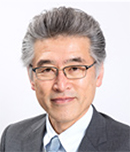
Takaya Danbara
-
Vice President
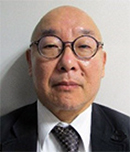
Naoyuki Yamaguchi
(President of National
Federation of Private
School Teachers and
Staffs Unions)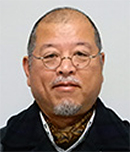
Hayato Fukiage
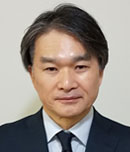
Kei Yamaguchi
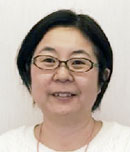
Noriko Yamamoto
-
General Secretary
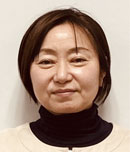
Yuko Kanai
-
Deputy General Secretary
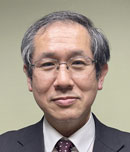
Kazushige Oshima
Koichi Yamamoto
-
Officer of International Affairs
Hayato Fukiage
-
Officer of Financial Affairs
Hayato Fukiage
-
Officer of Research, Wages, Rights and Legal Affaires
Koichi Yamamoto
-
Officer of Education and Culture
Kazushige Oshima
-
Officer of Organization, Publication and Information
Noriko Yamamoto
-
Officer of People’s Movement and Struggle
Nobuko Murata
-
Officer of Mutual Aid
Kei Yamaguchi


